Mar 18, 2011 · hypertensive urgencies may be treated on an outpatient basis, by gradually reducing bp using oral antihypertensives. hypertensive emergencies, on the other hand, require more immediate treatment with iv antihypertensives in an inpatient setting. pharmacists can play an integral role in the prevention and management of hypertensive crises. In hypertensive retinopathy, the most common finding is generalized or focal narrowing of the retinal arterioles; occlusion or leakage of the retinal vessels may occur with acute or advanced hypertension. every 5 years; remeasure if seen sooner. patients with normal blood pressure (120-129/80-84 mm hg): minimum of every 3 years. patients.
X retinopathy is a microvascular complication of diabetes mellitus (dm); however, it is also increasingly recognized in persons without dm. the microvascular diseases may play a prominent role in coronary heart disease (chd) development in individuals with dm.
Hypertensive retinopathy stages grade 1: high blood pressure and narrowing of the arteries is mild. generally, no symptoms are present. grade 2: high blood pressure and narrowing of the arteries is more pronounced. generally no symptoms are present. grade 3: signs of damage such as retinal. In hypertensive retinopathy, acute elevations of blood pressure lead to retinal arterial vasoconstriction, an auto regulatory response. persistent hypertension . Dec 15, 2020 · cns changes may also be seen in patients who present with hypertensive emergency. examination of the fundi may reveal evidence of hypertensive retinopathy, the severity of which depends on the duration and severity of the patient's hypertension, or earlier signs of hypertension, such as arteriovenous nicking.
Nov 25, 2004 introduction. hypertensive retinopathy is a condition characterized by a spectrum of retinal vascular signs in people with elevated blood pressure. Relative afferent pupillary defect; other names: marcus gunn pupil: the left optic nerve and the optic tracts. a marcus what is seen in hypertensive retinopathy gunn pupil indicates an afferent defect, usually at the level of the retina or optic nerve. moving a bright light from the unaffected eye to the affected eye would cause both eyes to dilate, because the ability to perceive the bright light is diminished.
Jul 10, 2020 this causes vasospasm and retinal arteriole narrowing, which is evident by the decrease in the arteriole to venule ratio (normal = 2:3). in older . Hypertensive retinopathy is diagnosed based upon its clinical appearance on dilated fundoscopic exam and coexistent hypertension. the history should focus .

Hypertensive emergency wikipedia.
Relative Afferent Pupillary Defect Wikipedia
Hypertensive retinopathy is retinal vascular damage caused by hypertension. signs usually develop late in the disease. funduscopic examination shows arteriolar constriction, arteriovenous nicking, vascular wall changes, flame-shaped hemorrhages, cotton-wool spots, yellow hard exudates, and optic disk edema. Hypertensive retinopathy is retinal vascular damage caused by hypertension. signs usually develop late in the disease. funduscopic examination shows . Roth's spots, also known as litten spots or the litten sign, are non-specific red spots with white or pale centres, seen on the retina and although traditionally associated with infective endocarditis, can occur in a number of other conditions including hypertension, diabetes, collagen vascular disease, extreme hypoxia, leukemia and hiv. Those situations include acute heart failure, coronary ischemia, hypertensive encephalopathy, and acute kidney injury. low end of normal bp is ~ 90/100/70, though the minimal blood pressure required to maintain perfusion varies with the individual patient.
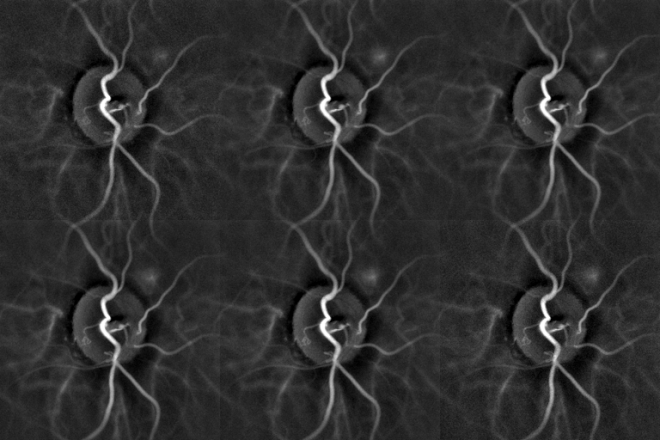
Hypertensive retinopathy includes two disease processes. the acute effects of systemic arterial hypertension are a result of vasospasm to autoregulate perfusion. the chronic effects of hypertension are caused by arteriosclerosis and predispose patients to visual loss from vascular occlusions or macroaneurysms. Arteriovenous nicking, also known as av nicking, is the phenomenon where, what is seen in hypertensive retinopathy on examination of the eye, a small artery is seen crossing a small vein which results in the compression of the vein with bulging on either side of the crossing. this is most commonly seen in eye disease caused by high blood pressure (hypertensive retinopathy). it is thought that, since the arteriole and venule share a. Oct 25, 2019 with other abnormalities, hypertension is a significant risk factor, including retinal vein and artery occlusion, retinal artery emboli, and diabetic . X since the 1990s, perinatal transmission of hiv has decreased substantially, largely as a result of improved detection secondary to routine hiv screening in pregnancy and the use of antiretroviral therapy. however, despite reductions, elimination of perinatal transmission, defined as an incidence of perinatal hiv infection of less than 1:100,000 live births and a transmission rate < 1%, 1.
Sep 15, 2007 hypertensive retinopathy (htr) is the most common ocular in this stage, acute elevation in blood pressure causes a breakdown of the . Over time, high blood pressure can cause damage to the retina’s blood vessels, limit the retina’s function, and put pressure on the optic nerve, causing vision problems. this condition is called. Mild signs of hypertensive retinopathy can be seen quite frequently in normal people (3–14% of adult individuals aged ≥40 years), even without what is seen in hypertensive retinopathy hypertension. hypertensive retinopathy is commonly considered a diagnostic feature of a hypertensive emergency although it is not invariably present.
Diabetic retinopathy clinical research network randomized trial evaluating ranibizumab plus prompt or deferred laser or triamcinolone plus prompt laser for diabetic macular edema. ophthalmology june 2010; 117(6):1064-1077. early treatment diabetic retinopathy study r: photocoagulation for diabetic macular edema. Nov 1, 2013 the retinal vasculature undergoes a series of vascular changes associated with elevated blood pressure, widely known as hypertensive .
Oct 01, 2002 · hypertension and diabetes mellitus are common diseases in the united states. patients with diabetes have a much higher rate of hypertension than would be expected in the general population. Similar to hypertensive retinopathy, evidence of nerve fiber infarcts due to ischemia what is seen in hypertensive retinopathy (cotton-wool spots) can be seen on physical exam. symptoms may include headache, nausea or vomiting. chest pain may occur due to increased workload on the heart resulting in inadequate delivery of oxygen to meet the heart muscle's metabolic needs.

Roths Spot Wikipedia

May 5, 2020 pathophysiology of hypertensive retinopathy. the vascular changes associated with systemic elevated blood pressure are visible in the retina . Sep 20, 2018 acute hypertensive retinal changes (hypertensive retinopathy). changes in the retinal circulation in the acute phase of hypertension primarily . Oct 01, 2002 · hypertension and diabetes mellitus are common diseases in the united states. patients with diabetes have a much higher rate of hypertension than would be expected in the general population. Symptoms of hypertensive retinopathy are sometimes very mild but some experience: 1 decreased vision or blurred vision bursting blood vessels on the outside of the eye (subconjunctival hemorrhages) double vision.
0 Response to "What Is Seen In Hypertensive Retinopathy"
Posting Komentar